

LatestNews

By JAMES MONTI , Latest

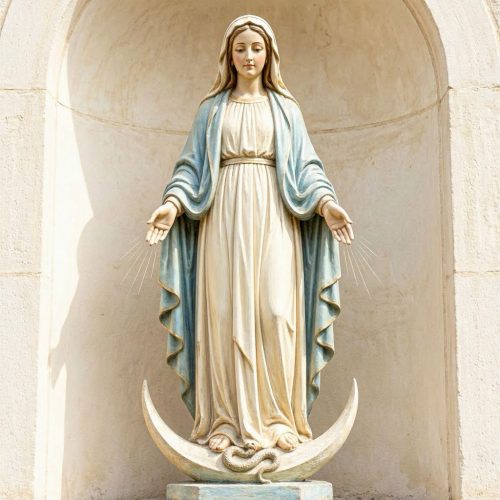
RESTORING THE SACRED . . . Our Lady As The Living Temple Of God

It is impossible not to notice that the majority of our Catholic churches and cathedrals, past and present, in one way or another bear the name of our Lady or of one of
By Dr. CHRISTOPHER MANION , Latest

Requiem For A Faithful Patriot

Bishop René Henry Gracida has died. We will miss him. Bishop Gracida was a stalwart defender of the faith and of the republic, and grateful to both. Of how many shepherds can we
By RAYMOND DESOUZA , Latest

A Filial Response To Pope Leo And His Friendship With Islam

So now Muslims can pray at the Vatican Library, the very center of Catholicism in the world. If you think that something similar can be expected to take place in Saudi Arabia, for
By JAMES DRUMMEY , Latest

Catholic Replies . . .

Q. In Matthew 8:21–22, it says that “another of the disciples said to him, ‘Lord, let me go first and bury my father.’ But Jesus answered him, ‘Follow me, and let the dead
By DONALD DEMARCO , Latest

Adjusting Morality To Fit The Changing Times

Times change. That is a truism. At the same time, it is a statement that is slightly misleading. Time itself, though very real, is an abstraction. Hence, it cannot act. It has no
By Dr. CHRISTOPHER MANION , Latest

Clearing The Fog

“States have the right to regulate migration flows and to defend their own frontiers, always guaranteeing the respect due to the dignity of each and every human person. Immigrants, moreover, have the duty
By JAMES MONTI , Latest

RESTORING THE SACRED . . . Glimpses Of Catholic Life From The 1950s

The history of our Catholic faith that has spanned nearly 2,000 years is an unending story of the loving Providence of God in the lives of countless souls. This story has been preserved
By Dr. CHRISTOPHER MANION , Latest

On Giving, Getting, And Government

The Washington Post, now known as the “Bezos Blog,” recently ran an interesting headline: “Retirees receive six times more in federal dollars than young people.” We apologize for the Post, that serves as
By Fr. KEVIN CUSICK , Latest

A Leaven In The World . . . Rest In Peace, Noelia

In the midst of the Easter Season, with the Resurrection of the Lord at the center of our prayer and worship, we mourn the increasing tide of the cult of death. Faith in
By JAMES MONTI , Latest

RESTORING THE SACRED

Holy Week In Corsica The Mediterranean island of Corsica is a culturally unique place with a largely French modern history but with a considerable Italian past. Its Holy Week customs are deeply rooted

RESTORING THE SACRED . . . Our Lady As The Living Temple Of God

RESTORING THE SACRED . . . Our Lady As The Living Temple Of God

It is impossible not to notice that the majority of our Catholic churches and cathedrals, past and present, in one way or another bear the name of our Lady or of one of the mysteries of her life (Immaculate Conception, Annunciation, Assumption, etc.) — that the majority of our Catholic places of worship are primarily under her patronage.

While one could simply ascribe this to the tremendous devotion that Catholics have expressed to the Blessed Virgin Mary from the earliest centuries of the Church’s history, there is in fact a more specific theological basis for associating the Mother of God with the sacred edifices within which the Church celebrates the Holy Eucharist and the other sacraments, and where the Church offers public praise to God in the Divine Office.

It is grounded both in our Lady’s identity as the original “Temple of God” for the first nine months of our Lord’s life on earth as the Incarnate Word and in the symbolism of the church edifice as the Church herself, the Bride of Christ, with the Blessed Virgin as her exemplar.

Several of the metaphorical titles of the Blessed Mother found in the Litany of Loreto and elsewhere stem from the one central idea of Mary’s forming a physical enclosure for Christ during her pregnancy. One of these is the “enclosed garden,” which affirms the unique virginity of Mary’s pregnancy — that our Lord entered her womb at the Incarnation and nine months later departed without ever opening the seal of her forever-virginal womb.

On several occasions I have encountered otherwise well-informed fellow Catholics who seem astonished when I mention to them this doctrine that our Lady’s womb remained closed even at the moment of our Lord’s birth. But this is what the Church has always taught, copiously attested by the Church Fathers, and what she means in affirming that the Blessed Virgin remained “ever-virgin” before, during, and after her pregnancy.

“But how can the Christ Child have passed out through the birth canal without the opening of the womb,” one might ask. The archangel Gabriel answered that question long ago: “For with God nothing will be impossible” (Luke 1:37).

The primary expression of this metaphor of Mary as an enclosed garden in ecclesiastical architecture is the cloister, the quadrangular garden totally shut in on all four sides that is a characteristic feature of many monasteries, convents, and seminaries. The flowering or fruit-bearing vegetation within these enclosed gardens represents the fruitful virginity of Mary.

At the seminary where I work as a library clerk, this symbolism is further emphasized by the placement of a statue of our Lady at the very center of the cloister garden.

Yet this likeness of Mary to an enclosed garden is but secondary to the metaphor of our Lady as the very Temple of God, that she was fashioned to be an enclosure for the habitation of God Himself in the flesh.

This comparison reveals all that the Old Testament has to say about the construction of the Tent of Meeting and its far more splendid realization, the Temple of Solomon, as prefigurations of the Blessed Virgin as the new House of God. The precious materials Moses and later King Solomon employed to build the earthly sanctuary of God under the Old Covenant anticipate the virtues that perfectly adorned the soul and body of the Blessed Virgin, making her tota pulchra, all-beautiful.

In a series of five journal studies published from 2020 through 2024, Spanish historian Jose Maria Salvador-Gonzalez has thoroughly explored and documented the Church’s reflection upon this image of Mary across the centuries, beginning with the many Church Fathers of both the West and the East who have spoken of our Lady in this beautiful manner.

The Eastern Fathers he cites include Origen, Eusebius of Caesarea, St. Ephrem, St. Gregory Nazianzen, St. Gregory of Nyssa, St. Cyril of Alexandria, St. Proclus of Constantinople, and St. John Damascene. Those of the West include St. Zeno of Verona, St. Ambrose, St. Jerome, St. Maximus of Turin, St. Augustine, St. Peter Chrysologus, and Pope St. Leo the Great.

In the fifth of his studies on this subject, Salvador-Gonzalez takes the reader through the somewhat less traveled world of medieval hymnography to demonstrate the frequent references to Mary as the Temple of God found in these texts from the 10th century through the 15th century. The variations from one text to another as to how this title of Mary is worded bring out the different dimensions of her role as the living Temple of Christ, from “Temple of the True Divinity,” “Temple of the Supreme Majesty,” and “Temple of Chastity” (11th century) to “Royal Hall of the King” and “Tower of the King of Glory” (12th century), and later, in the 14th century, to “Temple of the Trinity,” “Temple of Charity,” and “House of Holiness” (Jose Maria Salvador-Gonzalez, “The Temple as a Symbol of the Virgin Mary in Medieval Liturgical Hymns and Its Reflection in Images of the Annunciation of the 14th–15th Centuries,” Religions, vol. 15, no. 1446, pp. 4–5, 8–9, 12, 15).

Among the most beautiful of the medieval hymn verses that Salvador-Gonzales cites is the following from a 14th century hymn entitled, De Gloriosa Virgine Maria:

“Rejoice, marble temple / and city of the solstice, / crystal castle of the sun, / of the Sun that knows no sunset: / Make us a temple of chastity, / where the throne of God is, / make [us] a castle of purity / in which the solstice occurs” (ibid., p. 12).

These references to Mary as the Temple of God do not appear in isolation but are instead joined to a veritable litany of other metaphorical images and titles of our Lady and her virtues that flow effusively from the pens of authors enraptured with love for the Virgin Mother of God. It is the distinctive hallmark of these medieval Marian hymns that they are essentially love songs to the Virgin of virgins.

Those readers who are familiar with the particulars of medieval music know of the large corpus of songs to our Lady from this period that were composed both musically and linguistically after the style of secular songs of courtly love and chivalry, with the composer assuming the role of a troubadour.

Thus in the course of assembling medieval references to Mary as the Temple of God, Salvador-Gonzales has, by quoting in each case a complete verse or two from these hymns, provided us with a glimpse of the other beautiful images with which the medieval hymnists praised the Blessed Virgin.

A 15th-century hymn entitled, In Nativitate Domini Nostri, describes the Incarnation as coming about when the virginity of Mary was “moistened / with the dew of the Holy Spirit” (p. 22). A 14th-century hymn hails her as the “Fountain of salvation, fountain of decorum, / the strength of whose fragrance fills / the sky, the earth, the seas” (De beata Maria Virgine, in Salvador-Gonzalez, p. 14 — here I have slightly modified Salvador-Gonzales’ translation).

The image of the Blessed Virgin as the Temple of God also made its way onto the canvases of late medieval painters. In his 2024 study, Salvador-Gonzalez cites nine depictions of the Annunciation from the 14th and 15th centuries in which the home of Mary is portrayed as having the architectural features of a medieval church or cathedral. In some of these paintings, including Jan von Eyck’s famous 1434 portrait of the Annunciation in the collection of the National Gallery of Art in Washington, D.C., the setting is within a huge Gothic cathedral, the walls of which tower over Mary and the archangel Gabriel.

Salvador-Gonzalez focuses upon Annunciation portraits, but other medieval Marian paintings also express the same comparison of Mary to the Temple of God. An excellent example of this is to be seen in another painting of Jan von Eyck, his Madonna in a Church, exhibited in the Staatliche Museen of Berlin. Here our Lady is seen holding the Christ Child beneath the soaring vaults of a cathedral, with a magnificent rood screen behind her.

If our Lady has been seen across the ages as the highest exemplar of the Temple of God, then it follows that she ought to be in some sense the pattern for every church edifice — not that church architecture should literally replicate the form of the human body, but rather that it should reflect in a fitting manner the beauty and sacrality of our Lady. Our churches ought to be beautiful — beautiful in their architecture, beautiful in their artwork, beautiful in their liturgical furnishings, and beautiful in how the liturgical rites are celebrated within their walls — for they are images of all-beautiful Mary.

The Church has understood the verse from Psalm 44 in the Latin Vulgate, “The queen stood on thy right hand, in gilded clothing; surrounded with variety” (Ps. 44:10, Douay-Rheims translation), as both a prophecy of Mary and of the Church, and by extension can be seen from both these interpretations as applying to the church edifice as well.

In this context, it is worth recalling a text we quoted in an earlier essay a few years ago — the instructional introduction to a liturgical book of the German diocese of Regensburg, the 1662 Rituale Ratisbonense, in which the above psalm verse, together with the image of the Heavenly Jerusalem “as a bride adorned for her husband” from the Book of Revelation (Rev. 21:2), are employed to affirm the need for beauty in the Church’s liturgical worship:

“By a singular prerogative the Church is compared to the Bride, who enters in clothed as in a gown interwoven with gold; thus she strives to preserve for gracefulness all bodily splendor, that she should indeed wish no blemish to remain in her; whereupon when the Bridegroom Christ our Savior would have cast His eyes upon her more intensely, greatly gladdened by the beauty of His Bride, He says, ‘Thou art all fair, O my love, and there is not a spot in thee’ (Song, 4:7).

“Therefore unto this care the supreme pontiffs have diligently applied themselves, lest such splendid ornaments of the Bride, just as almost all things fade with time, are ever able to be obscured” (Agenda seu Rituale Ratisbonense, ad Usum Romanum Accommodatum, Regensburg, 1662, preface, sig.: (2r-):(3r).

One could say that when we pray through the intercession of our Lady, as we do most often in the Rosary, we symbolically enter the Temple of God to offer our praises to God. Let us hope and pray for the day when all our churches may reflect the beauty and splendor of the Mother of God.
RESTORING THE SACRED . . . Our Lady As The Living Temple Of God

It is impossible not to notice that the majority of our Catholic churches and cathedrals, past and present, in one way or another bear the name of our Lady or of one of the mysteries of her life (Immaculate Conception, Annunciation, Assumption, etc.) — that the majority of our Catholic places of worship are primarily under her patronage.

While one could simply ascribe this to the tremendous devotion that Catholics have expressed to the Blessed Virgin Mary from the earliest centuries of the Church’s history, there is in fact a more specific theological basis for associating the Mother of God with the sacred edifices within which the Church celebrates the Holy Eucharist and the other sacraments, and where the Church offers public praise to God in the Divine Office.

It is grounded both in our Lady’s identity as the original “Temple of God” for the first nine months of our Lord’s life on earth as the Incarnate Word and in the symbolism of the church edifice as the Church herself, the Bride of Christ, with the Blessed Virgin as her exemplar.

Several of the metaphorical titles of the Blessed Mother found in the Litany of Loreto and elsewhere stem from the one central idea of Mary’s forming a physical enclosure for Christ during her pregnancy. One of these is the “enclosed garden,” which affirms the unique virginity of Mary’s pregnancy — that our Lord entered her womb at the Incarnation and nine months later departed without ever opening the seal of her forever-virginal womb.

On several occasions I have encountered otherwise well-informed fellow Catholics who seem astonished when I mention to them this doctrine that our Lady’s womb remained closed even at the moment of our Lord’s birth. But this is what the Church has always taught, copiously attested by the Church Fathers, and what she means in affirming that the Blessed Virgin remained “ever-virgin” before, during, and after her pregnancy.

“But how can the Christ Child have passed out through the birth canal without the opening of the womb,” one might ask. The archangel Gabriel answered that question long ago: “For with God nothing will be impossible” (Luke 1:37).

The primary expression of this metaphor of Mary as an enclosed garden in ecclesiastical architecture is the cloister, the quadrangular garden totally shut in on all four sides that is a characteristic feature of many monasteries, convents, and seminaries. The flowering or fruit-bearing vegetation within these enclosed gardens represents the fruitful virginity of Mary.

At the seminary where I work as a library clerk, this symbolism is further emphasized by the placement of a statue of our Lady at the very center of the cloister garden.

Yet this likeness of Mary to an enclosed garden is but secondary to the metaphor of our Lady as the very Temple of God, that she was fashioned to be an enclosure for the habitation of God Himself in the flesh.

This comparison reveals all that the Old Testament has to say about the construction of the Tent of Meeting and its far more splendid realization, the Temple of Solomon, as prefigurations of the Blessed Virgin as the new House of God. The precious materials Moses and later King Solomon employed to build the earthly sanctuary of God under the Old Covenant anticipate the virtues that perfectly adorned the soul and body of the Blessed Virgin, making her tota pulchra, all-beautiful.

In a series of five journal studies published from 2020 through 2024, Spanish historian Jose Maria Salvador-Gonzalez has thoroughly explored and documented the Church’s reflection upon this image of Mary across the centuries, beginning with the many Church Fathers of both the West and the East who have spoken of our Lady in this beautiful manner.

The Eastern Fathers he cites include Origen, Eusebius of Caesarea, St. Ephrem, St. Gregory Nazianzen, St. Gregory of Nyssa, St. Cyril of Alexandria, St. Proclus of Constantinople, and St. John Damascene. Those of the West include St. Zeno of Verona, St. Ambrose, St. Jerome, St. Maximus of Turin, St. Augustine, St. Peter Chrysologus, and Pope St. Leo the Great.

In the fifth of his studies on this subject, Salvador-Gonzalez takes the reader through the somewhat less traveled world of medieval hymnography to demonstrate the frequent references to Mary as the Temple of God found in these texts from the 10th century through the 15th century. The variations from one text to another as to how this title of Mary is worded bring out the different dimensions of her role as the living Temple of Christ, from “Temple of the True Divinity,” “Temple of the Supreme Majesty,” and “Temple of Chastity” (11th century) to “Royal Hall of the King” and “Tower of the King of Glory” (12th century), and later, in the 14th century, to “Temple of the Trinity,” “Temple of Charity,” and “House of Holiness” (Jose Maria Salvador-Gonzalez, “The Temple as a Symbol of the Virgin Mary in Medieval Liturgical Hymns and Its Reflection in Images of the Annunciation of the 14th–15th Centuries,” Religions, vol. 15, no. 1446, pp. 4–5, 8–9, 12, 15).

Among the most beautiful of the medieval hymn verses that Salvador-Gonzales cites is the following from a 14th century hymn entitled, De Gloriosa Virgine Maria:

“Rejoice, marble temple / and city of the solstice, / crystal castle of the sun, / of the Sun that knows no sunset: / Make us a temple of chastity, / where the throne of God is, / make [us] a castle of purity / in which the solstice occurs” (ibid., p. 12).

These references to Mary as the Temple of God do not appear in isolation but are instead joined to a veritable litany of other metaphorical images and titles of our Lady and her virtues that flow effusively from the pens of authors enraptured with love for the Virgin Mother of God. It is the distinctive hallmark of these medieval Marian hymns that they are essentially love songs to the Virgin of virgins.

Those readers who are familiar with the particulars of medieval music know of the large corpus of songs to our Lady from this period that were composed both musically and linguistically after the style of secular songs of courtly love and chivalry, with the composer assuming the role of a troubadour.

Thus in the course of assembling medieval references to Mary as the Temple of God, Salvador-Gonzales has, by quoting in each case a complete verse or two from these hymns, provided us with a glimpse of the other beautiful images with which the medieval hymnists praised the Blessed Virgin.

A 15th-century hymn entitled, In Nativitate Domini Nostri, describes the Incarnation as coming about when the virginity of Mary was “moistened / with the dew of the Holy Spirit” (p. 22). A 14th-century hymn hails her as the “Fountain of salvation, fountain of decorum, / the strength of whose fragrance fills / the sky, the earth, the seas” (De beata Maria Virgine, in Salvador-Gonzalez, p. 14 — here I have slightly modified Salvador-Gonzales’ translation).

The image of the Blessed Virgin as the Temple of God also made its way onto the canvases of late medieval painters. In his 2024 study, Salvador-Gonzalez cites nine depictions of the Annunciation from the 14th and 15th centuries in which the home of Mary is portrayed as having the architectural features of a medieval church or cathedral. In some of these paintings, including Jan von Eyck’s famous 1434 portrait of the Annunciation in the collection of the National Gallery of Art in Washington, D.C., the setting is within a huge Gothic cathedral, the walls of which tower over Mary and the archangel Gabriel.

Salvador-Gonzalez focuses upon Annunciation portraits, but other medieval Marian paintings also express the same comparison of Mary to the Temple of God. An excellent example of this is to be seen in another painting of Jan von Eyck, his Madonna in a Church, exhibited in the Staatliche Museen of Berlin. Here our Lady is seen holding the Christ Child beneath the soaring vaults of a cathedral, with a magnificent rood screen behind her.

If our Lady has been seen across the ages as the highest exemplar of the Temple of God, then it follows that she ought to be in some sense the pattern for every church edifice — not that church architecture should literally replicate the form of the human body, but rather that it should reflect in a fitting manner the beauty and sacrality of our Lady. Our churches ought to be beautiful — beautiful in their architecture, beautiful in their artwork, beautiful in their liturgical furnishings, and beautiful in how the liturgical rites are celebrated within their walls — for they are images of all-beautiful Mary.

The Church has understood the verse from Psalm 44 in the Latin Vulgate, “The queen stood on thy right hand, in gilded clothing; surrounded with variety” (Ps. 44:10, Douay-Rheims translation), as both a prophecy of Mary and of the Church, and by extension can be seen from both these interpretations as applying to the church edifice as well.

In this context, it is worth recalling a text we quoted in an earlier essay a few years ago — the instructional introduction to a liturgical book of the German diocese of Regensburg, the 1662 Rituale Ratisbonense, in which the above psalm verse, together with the image of the Heavenly Jerusalem “as a bride adorned for her husband” from the Book of Revelation (Rev. 21:2), are employed to affirm the need for beauty in the Church’s liturgical worship:

“By a singular prerogative the Church is compared to the Bride, who enters in clothed as in a gown interwoven with gold; thus she strives to preserve for gracefulness all bodily splendor, that she should indeed wish no blemish to remain in her; whereupon when the Bridegroom Christ our Savior would have cast His eyes upon her more intensely, greatly gladdened by the beauty of His Bride, He says, ‘Thou art all fair, O my love, and there is not a spot in thee’ (Song, 4:7).

“Therefore unto this care the supreme pontiffs have diligently applied themselves, lest such splendid ornaments of the Bride, just as almost all things fade with time, are ever able to be obscured” (Agenda seu Rituale Ratisbonense, ad Usum Romanum Accommodatum, Regensburg, 1662, preface, sig.: (2r-):(3r).

One could say that when we pray through the intercession of our Lady, as we do most often in the Rosary, we symbolically enter the Temple of God to offer our praises to God. Let us hope and pray for the day when all our churches may reflect the beauty and splendor of the Mother of God.

It is impossible not to notice that the majority of our Catholic churches and cathedrals, past and present, in one way or another bear the name of our Lady or of one of the mysteries of her life (Immaculate Conception, Annunciation, Assumption, etc. ) — that the majority of our Catholic places of worship are primarily under her patronage. While one could simply ascribe this to the tremendous devotion that Catholics have expressed to the Blessed Virgin Mary from the earliest centuries of the Church’s history, there is in fact a more specific theological basis for associating the Mother of God with the sacred edifices within which the Church celebrates the Holy Eucharist and the other sacraments, and where the Church offers public praise to God in the Divine Office. It is grounded both in our Lady’s identity as the original “Temple of God” for the first nine months of our Lord’s life on earth as the Incarnate Word and in the symbolism of the church edifice as the Church herself, the Bride of Christ, with the Blessed Virgin as her exemplar. Several of the metaphorical titles of the Blessed Mother found in the Litany of Loreto and elsewhere stem from the one central idea of Mary’s forming a physical enclosure for Christ during her pregnancy.

This article is available to E- Edition subscribers only.

Support trusted Catholic journalism by subscribing to The Wanderer.

Subscribe Now

E-Edition

$7/month


  • access All Online Articles.

  • Read the Wanderer print edition and news articles online on your smartphone, tablet, and PC.

  • Your source for weekly Catholic news and commentary. Catholic, conservative, orthodox, and loyal to the Magisterium.


$60 yearly subscription


[leaky_paywall_subscription]

Author’s Archives

By JAMES MONTI

RESTORING THE SACRED . . . Glimpses Of Catholic Life From The 1950s

The history of our Catholic faith that has spanned nearly 2,000 years is an unending story of the loving Providence of God…

RESTORING THE SACRED

Holy Week In Corsica The Mediterranean island of Corsica is a culturally unique place with a largely French modern history but with…

RESTORING THE SACRED . . . The Reality Of The Sacred Passion

The Lenten season comes each year as a veritable retreat for the Church throughout the world, a particularly “acceptable time” (2 Cor.…

Restoring The Sacred

Meditating Upon The Scourging Of Christ Through Scripture And Art By JAMES MONTI Everything about Lent directs our thoughts toward the Passion…